

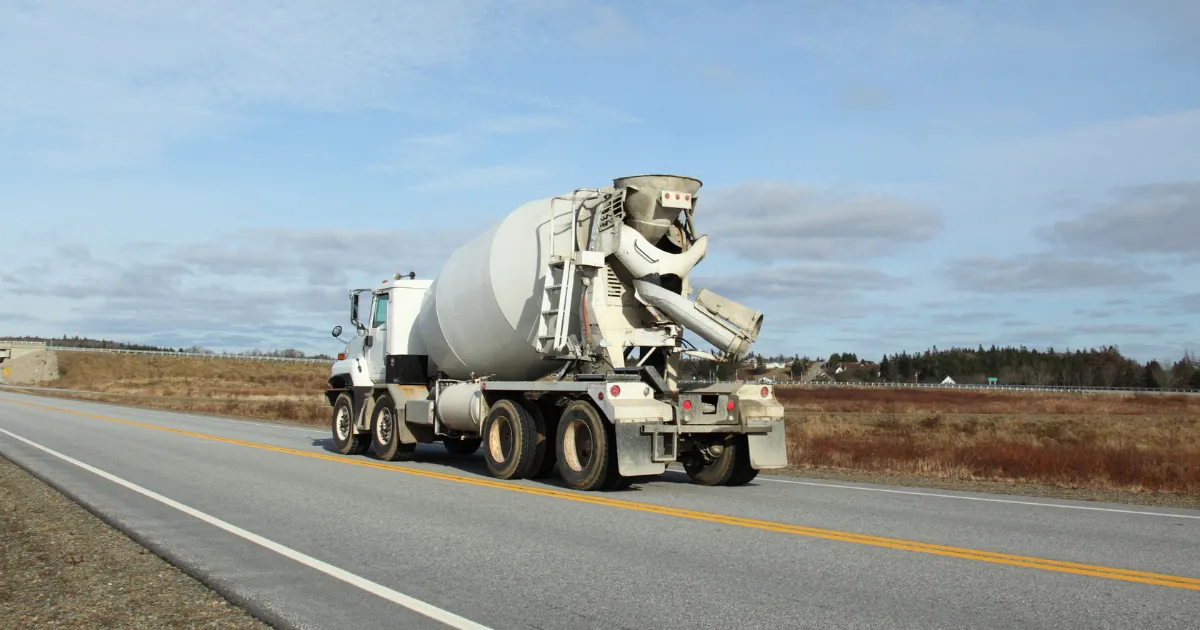
Cement mixer trucks are common sights throughout Virginia, particularly at construction sites, new housing developments, or commercial building projects. While these massive trucks are essential for bridges, neighborhoods, and commercial real estate, a fully-loaded cement mixer can weigh up to 80,000 pounds, which means that a collision with a cement mixing truck can cause extensive property damage and severe injuries and fatalities. In addition to the physical devastation, there are several legal and liability issues associated with any type of truck accident, including cement mixing trucks and Virginia’s strict liability laws. If you were injured in a cement mixer truck accident, an experienced truck accident lawyer will discuss the details of your case, ensure that your legal rights are protected, and pursue the maximum financial compensation you deserve.
What Makes Cement Mixer Trucks So Dangerous?
According to the Federal Motor Carrier Safety Administration (FMCSA), cement mixer trucks account for approximately 820 crashes each year. There are safety hazards associated with any large commercial truck, including long stopping distances, large blind spots, and the increased risk of rollovers due to the truck’s high center of gravity. Cement mixer trucks have the same hazards, as well as additional safety issues that are unique to this type of truck. The following are some of the most common reasons why you should use extreme caution when driving in the vicinity of a massive cement mixer truck:
- Moving center of gravity. Cement mixers carry thousands of pounds of wet concrete inside a rotating drum. As the drum turns, keeping the concrete from hardening, the liquid concrete sloshes around from side to side. This constant motion can dramatically shift the vehicle’s center of gravity, making it difficult for the truck driver to maintain control of the vehicle. In addition, if the truck driver approaches a turn or a sharp curve in the road too quickly, it can cause the truck to roll over.
- Speeding. Once the wet concrete is loaded into the drum, the timer officially starts ticking. Concrete generally begins to set and harden within 90 minutes, so truck drivers are under a great deal of pressure to deliver the load before it hardens inside the truck. When a truck driver is speeding, it makes it difficult to slow down or stop in time to avoid a devastating accident. In addition, the extreme force of impact associated with a speeding-related truck accident often results in particularly catastrophic accidents.
- Massive blind spots. All commercial trucks have large blind spots, including cement mixer trucks. Concrete mixer trucks feature elevated cabs, thick front ends, and large rear drums that create very large blind spots, also called “no zones.” This can make it very dangerous for passenger vehicles to drive in a truck’s blind spots, particularly directly behind or to the right of the truck.
- Driver error. Truck drivers are human and capable of making mistakes. However, if the mistake is due to negligence, it can result in devastating, yet preventable accidents. Examples of driver errors include:
– Speeding
– Distracted driving
– Tailgating
– Drowsy driving
– Aggressive driving
– Failure to yield
– Improper lane changes - Poor maintenance. Truck drivers and commercial trucking companies have a responsibility to maintain their vehicles and make any necessary repairs before allowing the truck back on the road. A failure to properly maintain a cement mixer truck can result in the following:
– Tire blowouts
– Steering failures
– Lighting issues
– Suspension problems
– Mechanical breakdowns - Driver inexperience. If a cement mixer truck driver is not properly trained or lacks experience, there is an increased risk of a serious truck accident. For example, an inexperienced driver who did not receive the necessary training is less likely to be able to handle shifting loads, navigate a wide turn, or maneuver lane changes or other complex traffic scenarios.
- Shifting loads. If a cement mixing truck is not properly loaded, the cement mixture can move around inside the mixing drum. This can cause the driver to lose control of the vehicle. In some cases, this can result in a flip or a rollover accident.
Who Is Responsible for a Cement Mixer Truck Accident?
If you were seriously injured in a cement mixer truck accident in Virginia, there are specific state laws that will potentially impact the amount of damages you recover. In addition, there are multiple parties that may be liable for the accident, depending on the circumstances of the accident and whether negligence was a factor. The following are some of the legal challenges you may face in a cement mixer truck accident claim:
- Virginia’s “pure contributory negligence” rule. Virginia is one of the few states in the country that follows the legal doctrine called pure contributory negligence. This rule states that if you are found to be even 1% at fault for the accident, you will likely be prohibited from recovering any damages. For example, if the truck driver caused a devastating rollover accident because they were speeding when approaching a turn, the defense may argue that you were partly at fault because you did not signal early enough. In order to overcome these strict defenses, you will need to collect meticulous evidence that proves that the truck driver was negligent and that you bear no liability. A highly skilled truck accident lawyer will be able to protect you from any allegations of shared fault, which would prevent you from recovering any damages.
- Complex multi-party insurance policies. Commercial vehicles, like cement mixer trucks, carry significantly higher liability insurance coverage limits than standard passenger vehicles. While this means that there may be sufficient resources to cover serious injuries, lost wages, and pain and suffering, it also means that insurance companies often have a team of highly paid lawyers, accident reconstruction experts, and risk managers who will use a range of tactics to minimize the damages they are responsible for paying. In addition, there are often multiple corporate entities involved, including the batch plant, the transport company, the general contractor, and the equipment manufacturer, each of which use their own insurance company. Recovering the damages you are entitled to is a complex process that requires highly skilled legal representation and key evidence.
What Evidence Do I Need to Prove a Cement Mixer Truck Accident Claim?
In order to have a successful claim and recover the maximum damages you are entitled to, you will need to prove that the negligent party is solely responsible for the accident. The following are examples of critical evidence that help prove your claim:
- Electronic Logging Devices (ELDs). These devices track driver hours, speeds, and rest breaks to help prove whether the driver was drowsy or violated speed limits.
- Black box data. These record hard braking, engine RPS, velocity, and steering angles in the moment before impact.
- Batch plant delivery logs. These show exact loading times, slump tests, and route deadlines set by the supplier.
- Onboard dashcam and video footage. These capture visual proof of lane changes, blind spot clearance, and road conditions.
Who Is Liable for a Cement Mixer Truck Accident?
When two passenger vehicles are involved in a car accident, liability is generally determined by which driver was negligent. If a cement mixer truck, or any other commercial truck, is involved, multiple parties or entities may share liability, including the following:
- The truck driver. If the truck driver was speeding, texting, or talking on the phone, driving aggressively, or engaging in any other negligent behavior, they may be found liable for a resulting truck accident.
- The trucking company or the concrete supply company. Employers are generally responsible for the negligent actions of their employees if they were committed within the scope of their job duties. The company may also be liable for the following:
– Negligent hiring or retention. If a truck driver was hired, or remained employed, despite having a history of reckless driving, DUI offenses, or speeding tickets, the company may be held liable.
– Inadequate training. If the truck company fails to properly train its drivers on how to navigate the unique challenges associated with cement mixer trucks or how to navigate tight residential streets, it may be liable for a resulting truck accident.
– Pressure drivers to violate safety rules. If employers pressure drivers to exceed the federal Hours of Service (HOS) limits in order to meet tight delivery deadlines, they may be found liable for a resulting truck accident. - Maintenance and mechanical service contractors. Cement mixer trucks require regular maintenance and servicing. A failure to do so can result in a range of hazards, including tire blowouts, brake line failure, or issues with the hydraulic system.
An Experienced Virginia Beach Truck Accident Lawyer at Anchor Legal ® Represents Victims of Cement Mixer Truck Accidents to Get the Deserved Compensation
If you or someone you know was severely injured in a cement mixer truck accident, do not hesitate to contact a Virginia Beach truck accident lawyer at Anchor Legal ®. We understand the unique liability issues associated with these accidents and will work tirelessly to ensure that the negligent party is held liable for their actions. Our dedicated legal team will protect your rights and negotiate the best possible settlement outcome. To schedule a free consultation, call today at 757-LAW-0000 or contact us online. Located in Virginia Beach, we proudly serve clients in the surrounding areas.