

Key Takeaways:
- “Hydroplaning” does not automatically excuse a driver from liability for a car accident.
- Speed, tire condition, and following distance often determine fault in these claims.
- Police reports and weather data help establish how the crash occurred.
- A Virginia Beach car accident lawyer gathers evidence to counter the “unavoidable accident” defense.
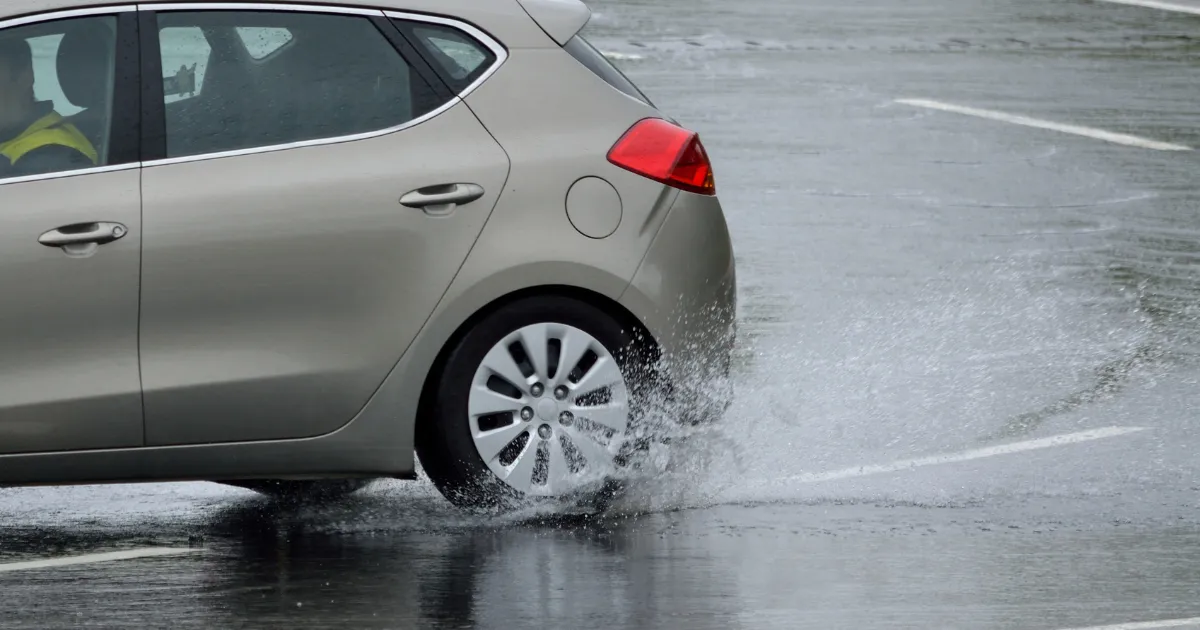
A hydroplaning accident claim can still hold another driver liable if their speed, following distance, or vehicle condition contributed to the loss of control. Weather alone does not excuse a driver from the duty to operate safely in wet conditions, and insurance companies sometimes rely on this assumption to minimize a valid claim. If someone else’s negligence was to blame for your car accident injuries, they have a legal obligation to pay you damages.
Why Hydroplaning Does Not Automatically Excuse a Driver
Some drivers assume that hydroplaning is simply an accident that no one could have prevented. That is not the case. Virginia law still expects drivers to adjust their speed and following distance for wet road conditions, since visibility and traction change significantly once rain begins. What constitutes reasonable care depends on the actual roadway conditions, and what is reasonable in sunshine may not be in rain. If a driver was traveling too fast for the weather, following too closely, or driving on worn tires, that driver can still be held responsible for losing control.
What Evidence Supports a Hydroplaning Claim
Again, the key to your legal case is compiling evidence showing the other driver hydroplaned because they were not exercising due care. Building a strong claim after a hydroplaning crash starts with the same evidence used in most car accident cases. A copy of the official police report often includes the officer’s observations about road conditions, weather, and any citations issued at the scene. Photographs of the roadway, standing water, and tire tread on the at-fault vehicle can help establish whether the conditions were foreseeable and whether the vehicle was properly maintained.
How Insurance Companies Respond to Hydroplaning Claims
Insurance adjusters sometimes label hydroplaning crashes as “unavoidable accidents” to reduce or deny a claim. This argument often overlooks specific driving decisions that contributed to the loss of control, such as excessive speed for the conditions or ignoring visible standing water on the roadway. Virginia Beach car accident lawyers push back on this framing by presenting evidence that ties the crash to a driver’s specific conduct rather than the weather alone.
Adjusters may also argue that the injured party contributed to the crash, which can reduce compensation under Virginia’s “contributory negligence” rule. Because this rule can bar recovery entirely if the injured driver is found even slightly at fault, building a clear and well-documented claim from the outset is especially important in these cases.
What to Do After a Hydroplaning Crash
Drivers involved in a hydroplaning crash should seek medical attention and request that a police officer respond to the scene when possible. Showing that a driver was responsible for hydroplaning requires you to produce evidence about how they may have been driving before the crash. Further, taking photographs of the roadway conditions, vehicle damage, and any visible water accumulation can help preserve evidence before it changes. Contacting a lawyer early allows time to gather weather records and vehicle data before they become harder to obtain.
Frequently Asked Questions (FAQs):
Can a driver be at fault for hydroplaning even without speeding?
Yes, worn tires, sudden braking, or driving through standing water without slowing down can also establish fault.
Does rain automatically reduce a driver’s liability?
No, drivers are still expected to adjust their driving to match the conditions of the road.
How does Virginia’s “contributory negligence” rule affect a hydroplaning claim?
If the injured driver is found even slightly at fault, compensation may be barred entirely under this rule.
If You Were the Unfortunate Victim of a Hydroplaning Crash, an Experienced Virginia Beach Car Accident Lawyer at Anchor Legal ® Can Offer Legal Guidance to Get You the Compensation You Deserve
A Virginia Beach car accident lawyer at Anchor Legal ® helps clients who have been injured in crashes involving wet or hazardous road conditions. It is crucial that you get us working on your case immediately, given the fact that key evidence could be lost to you. To schedule a free consultation, start by messaging us online or call today at 757-LAW-0000. Located in Virginia Beach, we proudly serve clients in the surrounding areas.