

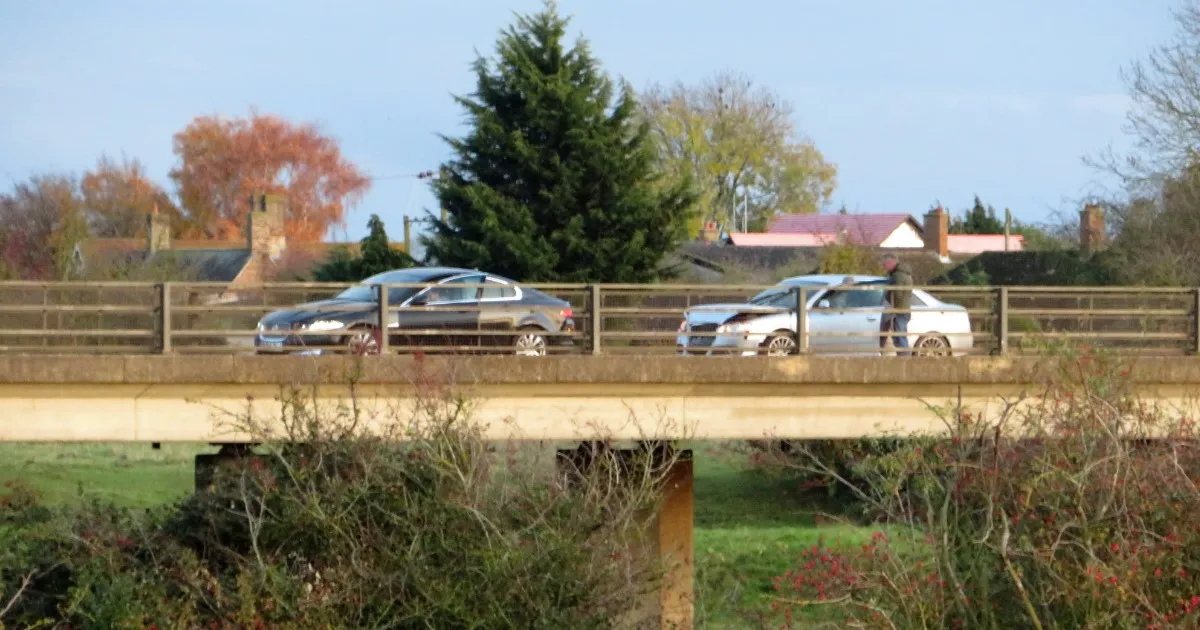
Car accidents are stressful situations, regardless of the circumstances. However, when a car accident occurs on a bridge, it poses several unique hazards, from limited shoulder space and high traffic density to a lack of escape routes and an increased risk of being forced over the edge, which can cause your vehicle to plummet into the water below. In fact, car accidents on bridges are 10 times more dangerous than those that occur on regular roadways.
While you may not be able to avoid a car accident on a bridge if another motorist is driving recklessly or engaging in negligent behavior, there are steps you can take to ensure that your legal rights are protected and that you receive prompt medical attention if you suffer a serious injury.
A dedicated car accident lawyer will discuss the details of your case, ensure that the negligent party is held liable for their actions, and recover the maximum damages to which you are entitled.
What Makes Car Accidents on Bridges So Dangerous?
According to the Virginia Department of Transportation (VDOT), there are more than 11,900 bridges in the state, including the Chesapeake Bay Bridge-Tunnel, which connects the Delmarva Peninsula with Virginia Beach and the Hampton Roads metropolitan area, the Berkley Bridge, which is a double-leaf bascule bridge across the Eastern Branch Elizabeth River in Norfolk that connects the Berkely neighborhood with downtown Norfolk, and the 14th Street Bridge, which connects Arlington with Washington, D.C.
While these structures serve an important purpose, allowing motorists to cross over bodies of water, there are several factors that make bridges more dangerous than roadways, including the following:
- Chain reaction collisions. Since there is limited space on bridges, motorists have very little room to quickly change lanes or maneuver to avoid an accident. This can quickly turn into a multi-vehicle, chain-reaction accident.
- Side bridge impacts. Bridge barriers are protective structures designed to prevent vehicles from falling off the sides of a bridge, a situation that can have deadly consequences. However, they can also cause significant damage to the vehicle’s side if it is pushed into the bridge barrier. In extreme cases, a passenger can become pinned between the barrier and another vehicle.
- Forced overboard. While most bridge barriers have concrete walls fortified with galvanized steel, there is a risk that a car accident could cause a vehicle to roll over the edge, particularly in a high-speed collision where the extreme force of impact pushes the vehicle over the edge.
- Bridge collapse. While this is extremely rare, a bridge can collapse if it is not properly maintained and excessive loads or irregular vibrations compromise its structural stability. In March of 2024, the Francis Scott Key Bridge in Baltimore collapsed after a cargo ship lost power and struck a bridge pier.
What Are the Most Common Causes of Car Accidents on Bridges?
Most car accidents on bridges are caused by some type of driver negligence, including distracted driving, speeding, tailgating, drowsy driving, and aggressive or reckless driving. Inclement weather, such as rain, sleet, fog, high winds, and extreme sun glare, can also increase the risk of a car accident on a bridge.
While motorists cannot control the weather, they have a responsibility to take necessary safety precautions, such as reducing their speed, increasing their following distance, or, if possible, avoiding driving on a bridge. Additional causes of bridge accidents include poor bridge design, missing guardrails, inadequate lighting, and inadequately marked ramps on the bridge.
What Are the Most Common Types of Car Accidents on Bridges?
Due to the confined nature of a bridge, accidents tend to involve multiple vehicles and can cause extensive property damage and severe injuries. The following are some of the most common types of car accidents on bridges in Virginia:
- Multi-vehicle pileups.If a motorist suddenly stops on a bridge, it can be difficult for drivers behind them to stop in time to avoid a collision. This often leads to a chain reaction collision involving three or more vehicles.
- Head-on collisions.If there is no center median divider, a driver can drift into the wrong lane, causing a devastating head-on collision. These often result in catastrophic injuries and fatalities.
- Sideswipe accidents. Lanes on bridges are often narrower than standard roadway lanes. If a driver is distracted, drowsy, or not paying attention, and drifts into the adjacent lane, they may sideswipe the vehicle next to them.
- Guardrail deflections. If a motorist loses control of their vehicle, they could strike the guardrail, which can cause secondary collisions if the rail redirects the car across lanes of traffic.
- Debris on the road. If a motorist is following a truck, and cargo falls off the trailer and onto the road, drivers in the vicinity are forced to slam on the brakes or hit the debris, which can cause a serious accident.
What Steps Do I Take After a Car Accident on a Bridge?
Due to the scarcity of space on a bridge, there are a number of important safety protocols that you must keep in mind if you are involved in a car accident on a bridge, including the following:
Call 911
Make sure you report the accident as soon as possible and notify dispatch if there are injuries, so they can send an ambulance to the scene.
Move to a safe location
In most cases, there is no shoulder or safe place to pull over if the accident happens on a bridge. If your vehicle is still running, try to get off the bridge and find a safe location to pull over. If you are unable to move your vehicle, stay in the car, turn on your hazard lights, and wait for the police to arrive.
Seek immediate medical attention
Even if your injuries do not seem severe or life-threatening, a healthcare professional at the scene must examine you. Some injuries may not be apparent right away, and others are often masked by the adrenaline that is coursing through the body after an accident. If you do not seek medical attention, an undiagnosed injury can become much more serious and difficult to treat. This can also have a negative impact on your insurance claim if the insurance company argues that your injuries must not be very serious if you did not find it necessary to seek medical attention. The insurance company may decide to deny your claim.
Take pictures
If you are physically able to do so, take pictures of the damage to your vehicle, your injuries, debris on the road, and the position of the other vehicles involved.
Talk to witnesses
If there were witnesses who saw the accident, ask whether they would be willing to provide a statement and to provide their contact information.
Exchange information with the other driver
Share license plate numbers, driver’s license numbers, insurance information, and contact information with the other driver or drivers involved in the accident.
Notify your insurance company
Only discuss the details of the accident when talking to your insurance agent. Do not say anything that could be interpreted as admitting fault, as this may be used against you in the claims process. Virginia follows the “contributory negligence” rule, which states that you are prohibited from recovering any damages if you are found to be even 1% at fault.
Contact a highly skilled car accident lawyer
Car accidents on bridges can be complicated cases, so it is in your best interest to contact an experienced car accident lawyer who will help you navigate the claims process, ensure that the negligent party is held liable, and pursue the maximum financial compensation you deserve.
What Damages Am I Entitled to in a Car Accident on a Bridge?
If you are seriously injured in a car accident that occurred on a bridge, and you can prove that the other driver is liable, you may be entitled to the following damages:
- Medical expenses
- Lost wages
- Property damage
- Pain and suffering
- Emotional distress
- Wrongful death if the accident caused a tragic fatality.
A Virginia Beach Car Accident Lawyer at Anchor Legal ®Represents Clients Injured in Car Crashes on Bridges
If you or a loved one was seriously injured in a car accident, do not hesitate to contact a Chesapeake car accident lawyer at Anchor Legal. Our dedicated legal team will conduct a thorough investigation to determine the cause of the accident. To schedule a free consultation, call today at 757-LAW-0000 or contact us online. Located in Virginia Beach, we proudly serve clients in the surrounding areas.